

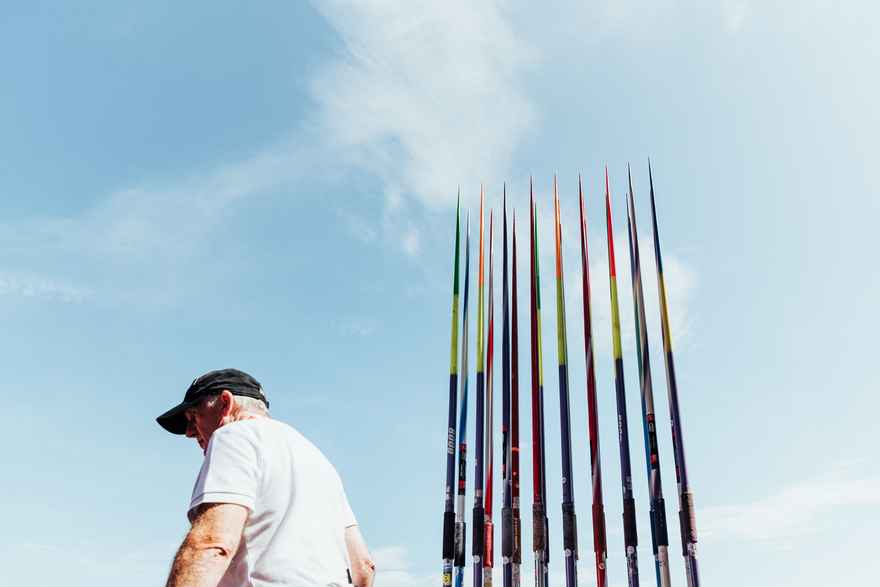
Most sporty kids start out playing everything, because at that age, sport simply means fun. The more they do, the more friends they make and the more fun they have. Then they start showing real ability in one sport, and suddenly the question changes: should they drop everything else and focus?
It's one of the most common dilemmas in youth sport, and there's no single right answer. But there is a lot of evidence to help you decide.
In this blog, we look at:
What early specialisation and multi-sport participation actually mean
The real risks of specialising too soon
When early specialisation has worked (and why it's often the exception)
What the experts currently recommend
How to make the right decision for your child
What Do "Early Specialisation" and "Multi-Sport" Actually Mean?
These two terms get thrown around a lot, so let's be clear on what they mean.
Early sport specialisation
This has been defined as "intense year-round training in a specific sport with the exclusion of other sports at a young age."
Multi-sport or generalised approach
This means "participation in a variety of sports and activities through which an athlete develops multilateral physical, social, and psychological skills."
Both have genuine advantages. Specialising early allows for more focused training, clearer progression pathways, and faster sport-specific development. But it also comes with risks that are easy to underestimate when your child is performing well, and the opportunities seem exciting.
What Are the Benefits of Playing Multiple Sports?
Keeping things broad gives young athletes a better chance of:
Discovering which sport they actually love (and which one they're best at)
Developing a wider range of motor skills that transfer across sports
Building varied friendship groups across different sporting environments
Staying mentally engaged and avoiding burnout
Staying in sport longer, which ultimately increases the chance of long-term success
Many sports parents feel pressure to have their child specialise in one sport; the pull towards early commitment is real. But the evidence for keeping options open is compelling.
The Risks of Specialising Too Early
Overuse injuries
When a young athlete trains in only one sport, the same muscles, joints, and movement patterns take repeated strain. A teenage athlete's body is still developing, making it more susceptible to tendinitis, stress fractures, and joint damage. Overuse injuries account for nearly 50% of all sports injuries in youth athletes, and early specialisation is a major contributor to this trend.
Burnout and dropping out
The pressure that comes with specialisation can drain the joy out of a sport a child once loved. It's not uncommon for athletes who specialised young to quit entirely just a few years later. A 2025 rapid review from Duke University School of Medicine, analysing over 62,000 young athletes across 93 studies, found that early specialisation was linked to higher rates of fatigue, anxiety, depressive symptoms, and burnout compared to multi-sport athletes. (1).
Missed opportunities and narrowed friendships
Focusing on one sport means fewer diverse social interactions and a narrower friendship group during some of the most formative years of a young person's life. Since enjoyment and friendships are among the top reasons young athletes continue playing sport, this matters more than many parents realise.
The "what if?" question
Missing out on other sports also means never knowing whether a different one might have been their actual strength. You don't know until you try.
When Early Specialisation Works
For some athletes, early focus has clearly paid off. Serena and Venus Williams, Tiger Woods, and pole vault world record holder Mondo Duplantis all committed to their sport from a very young age. Duplantis was vaulting at three, set his first age-group world best at seven, and has barely looked back since.
But these are often exceptional cases shaped by exceptional circumstances, including highly sport-literate parents and specific sports where early technical development genuinely matters.
What Many Elites Did Instead
Roger Federer's mother, a tennis coach, is widely reported to have encouraged him to keep playing badminton and basketball during his early years. Federer has credited those sports for his exceptional hand-eye coordination, and he was still competing at the top of tennis at 40 before retiring.
Karsten Warholm, the 400m hurdles world record holder, spent his formative years as a decathlete. His dominance in the hurdles has been directly attributed to the full-body strength and athletic range that came from those years of multi-event training.
GB Olympic high jumper Morgan Lake began as a heptathlete before specialising in the high jump and achieving world-level success.
The pattern here is consistent: broad athletic development followed by later specialisation. This is exactly what the research increasingly supports.
What the Experts Say?
David Epstein's book Range makes a compelling case that early generalisation leading to later specialisation is, more often than not, the most effective strategy, not just in sport but across many fields of expertise. Epstein and Malcolm Gladwell, both renowned authors in the science of human performance, have a fascinating, in-depth conversation on exactly this topic. It's one of the resources we include in our The Athlete Place | Parents lesson on sport specialisation, part of a full module on supporting your young athlete's development.
Early sport specialisation is increasingly regarded as a concern by sports medicine researchers, with evidence pointing to increased injury risk, burnout potential, and reduced fundamental movement skills as significant downsides. (2) The 2015 IOC Consensus on Youth Athletic Development, and more recent 2024 IOC statements on elite youth athletes, have also shifted towards emphasising individual readiness over generic age-based timelines for specialisation. (3)
Should My Child Specialise?
The honest answer is: it depends on your child, not on what their coach, a scout, or other parents think.
Decisions around specialisation will affect your child's health, happiness, and sporting future. Whether the outcome is positive or negative depends heavily on their personality, their readiness, and whether they genuinely want this, not just whether they're talented enough to pursue it.
A good starting point is to weigh these questions:
Does my child love this sport enough to make it their world right now?
Will they thrive under the pressure that comes with specialisation, or will it drain them?
Are they telling me they want to focus, or am I reading that into their performance?
Is their body ready? Have I spoken to their coach or a sports medicine professional about injury risk?
If you're feeling pressure from coaches or talent scouts but aren't sure your child is ready, trust your instincts. You know your child better than anyone on the sideline does.
The Bottom Line
The weight of current evidence favours a multi-sport approach during the early and mid-teenage years, with specialisation coming later, when the athlete is physically and psychologically ready, and it's their choice.
Rushing this process doesn't just risk injury; it risks turning sport into a source of stress rather than a foundation for a lifelong, successful athletic career.
Last updated April 2026
References:
Luo EJ, Reed J, Mitchell JK, Dorrestein E, Kiwinda LV, Hendren S, Hinton ZW & Lau BC. Early sport specialization in a pediatric population: a rapid review of injury, function, performance, and psychological outcomes. Clinical Practice 15(5): 88, 2025.
Wiersma LD. Risks and benefits of youth sport specialization: Perspectives and recommendations. Pediatric Exercise Science 12(1): 13-22, 2000.
Bergeron MF et al. International Olympic Committee consensus statement on youth athletic development. British Journal of Sports Medicine, 2015.
Also worth reading:
5 Ways to Improve Your Teenager's Sports Performance
Sports Nutrition Basics for Parents of Teenage Athletes
How to Behave at Your Child’s Sport Competitions
If you're a young athlete or a sports parent looking for content that actually helps, The Athlete Place was built for you.










Comments