

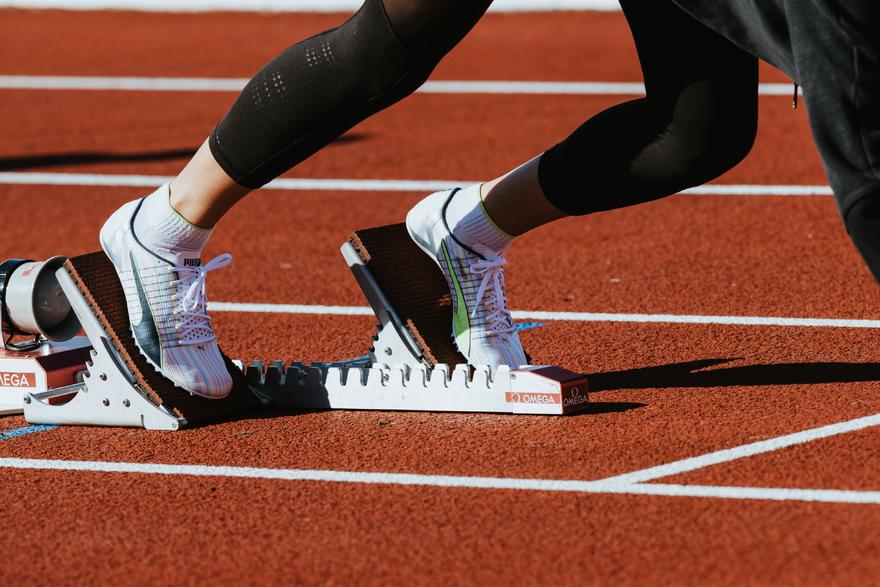
Why Kit Matters
Sports give young people so much: fitness, confidence, friendships, and a sense of who they are. As a parent, you're there to make that experience as positive as possible.
But there's something that can catch parents off guard: the kit they wear starts to really matter to them, and not just for practical reasons.
Teenagers are at a stage where fitting in and feeling accepted by their peers can become seriously important to their wellbeing. Psychologists call it 'social comparison' and for this age group, how they believe they appear to others really does matter (1). That suddenly urgent need to replace perfectly good kit with something "better"? It's not just vanity. It's identity.
For them, wearing the right kit can mean the difference between walking onto a training pitch feeling confident or self-conscious. And confidence at this age has a real impact on performance and enjoyment.

Joe, founder of The Athlete Place ~ 10 years old, and his rapidly growing feet!
The Growth Spurt Problem
Here's where it gets expensive.
My son Joe's feet started growing rapidly around age 9 or 10, going up a size roughly every two to three months. At the time, he was playing football (which required both grass and 3G boots), doing athletics (trainers and spikes), and had a brief and costly flirtation with the high jump, for which he insisted he needed the special spikes his mates were wearing!
That added up to seven different items of footwear, most of which needed replacing every few months. Add school shoes and "going out" shoes, and the financial reality hit hard, especially as a single parent also navigating competition, travel and accommodation costs.
One lesson I learned the expensive way: don't buy specialist kit for a new event until they’ve stuck with it long enough to justify the expense. Those bright orange high jump spikes went on eBay pretty quickly.
Super-Shoes: A New Level of Pressure
The arrival of carbon-plated 'super-shoes' has brought a whole new dimension to the kit conversation for parents of young runners.
These shoes, costing £230 or more, are now appearing at youth-level competitions. To a young, impressionable athlete, they can look and feel “essential”. The influence of role models on young people can be huge when it comes to sports footwear (2).
But is the hype surrounding performance gains backed by evidence, and is it relevant for most young runners? If we’re being brutally honest, the research does suggest performance gains, but these amount to fractions of a second, which makes a real difference at the elite level but is often irrelevant for the rest of the sporting world. For your child, the chances are that the fundamentals of running matter way more than the footwear.
Before buying:
Are you prepared to spend that amount every time their feet grow?
Once they've had one pair, cheaper options become a hard/impossible sell
Feet can grow so fast during adolescence that you could spend £1,000+ on one type of shoe within a couple of years
If other parents are buying them, that's their choice and their budget. Yours doesn't have to match theirs.

Joe, in the light blue top, before fashion, brands, and crazy prices entered the conversation…
What Actually Drives Performance
On the other side of the argument, for balance, we need to consider the placebo effect, because believe it or not, wearing super-shoes can actually make you believe you can run faster! (3) However, it's worth being clear on what’s actually going on here, because it matters beyond just the finances.
Young athletes who grow up believing that performance comes from the right shoes or the best kit are learning something that can often hold them back, because they can’t always control these external factors. Imagine the scenes if they somehow leave their super-shoes at home and have to run in “normal” running shoes… how will that pan out if their belief is tied to that expensive carbon-plate?
Ideally, we need to steer clear of this belief trap and instead help them understand that the things that they control, such as hard work, quality sleep, good nutrition, consistent training, and a strong "I can do this" attitude, will take them far further than any shoe brand ever will.
Research has repeatedly shown that this growth mindset is what leads to better long-term athletic development and success in life. Carol Dweck’s “Mindset: The New Psychology of Success” is a highly recommended read.
So, our advice? View the fancy shoes as the cherry on top after the hard work and smart lifestyle habits have been done. And hopefully, by then their feet will have stopped growing!
Practical Ways to Manage the Cost
You don't have to choose between your child's confidence and your bank account. Here's what actually helps:
Club second-hand kit shops are genuinely brilliant. If your club doesn't have one, suggest it. Kit that's been outgrown by an older athlete your child admires? Even better.
Parent kit-swap groups work well. Pass on what's been outgrown, accept what fits, and offer a small contribution toward replacement costs. Everyone benefits.
Set expectations early. Being honest with your child about what's affordable isn't letting them down. It's teaching them something important about reality and resourcefulness.
And when you can't always give them exactly what they want, remember, you're giving them exactly what they need: your support, your time, and your encouragement ❤️
Last updated May 2026
References
(1) Waqar, A., Javed, Z. and Rasool, A., 2013. Brand Consciousness, social comparison and materialism amongst teenagers. Pakistan journal of humanities and social sciences, 11(2), pp. 1052-1060.
(2) Hansson, A., 2025. What Opportunities and Challenges do Sportswear Companies Face when Involving Elite Athletes in Innovation?
(3) Thornton, O.R., 2025. “Do Speedy-Shoes Make You Feel Speedier?” The Biopsychosocial Advantage: Deconstructing the Interplay of Biomechanics and Belief in Carbon-Plated Shoes for Ultrarunning.
Also worth reading:
5 Ways to Improve Your Teenager's Sports Performance
Sports Nutrition Basics for Parents of Teenage Athletes
If you're a young athlete or a sports parent looking for content that actually helps, The Athlete Place was built for you.










Comments