OUR STORY
I'm Joe, founder of The Athlete Place.
I was ranked No. 1 in the UK in the 400 m hurdles from ages 15 to 17, but at 20, it all fell apart.
I'd won the English Schools Championships and was national champion multiple times, represented England at U17 level and Great Britain at U20. But none of that protected me from completely burning out at 20.
I didn't retire gracefully. I didn't decide sport wasn't for me. I hit a wall physically, mentally, and emotionally. I had nothing in place to help me climb back. Limited understanding. No tools. No resources that spoke to what I was actually going through.
It all felt too impossible, and I quit. And for a long time, I was in a really dark place.
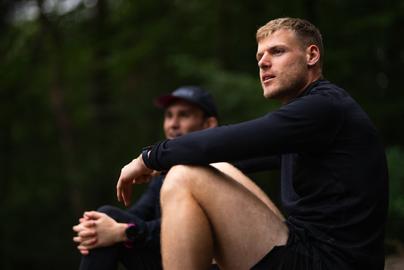
Joe Fuggle, Founder of The Athlete Place
Every athlete's journey is a rollercoaster of highs and lows...
Looking back, I can see so clearly what was missing. Not talent. Not work ethic. But the ability to turn defeat into motivation, a "why" that worked for me, not against me, and a training setup that exuded compassion and positivity, not toxicity.
At that time, I lacked understanding of how my mind worked under pressure, and how to handle the emotional weight of being "good young" when others were overtaking me. Not helped by centring my entire worth on my sport achievements.
At the time, no one taught you this stuff. You were just expected to figure it out.
Too many young, talented athletes experience career-impacting or career-ending challenges during their teenage years. Some never find their way back to sport.
It's heartbreaking that so many young and often talented athletes never get the opportunity to reach their true potential and experience the internal rewards that come with that.
Joe discussing The Athlete Place with Loughborough University in 2022.
We've come a long way since then... but the fundamentals stay the same.
Finding the way back
Recovery wasn't quick, and it wasn't linear. My mental health is still a work in progress. The feeling of "not being good enough" doesn't disappear overnight, and I won't pretend it's sorted even now, but time and therapy continue to help. Gradually, I found that what helped me the most was being useful to other athletes.
I started going back to the track. Not to compete but to help pace others, helping them towards their own goals.
I loved that feeling.
For the last three years, including in the build-up to the World Championships in Budapest, and the Paris Olympics, I worked as a pacemaker for Katarina Johnson-Thompson, Olympian and world champion heptathlete. She came home with the gold and silver medals, respectively. Watching an athlete of that calibre prepare, compete, and perform at the very highest level emphasised the importance of a solid foundation formed during the teenage years.
And it made me more determined than ever to ensure young athletes, of all levels, not just those on performance pathways, have access to the information and guidance needed to achieve this.

Katarina and Joe's final session before the Paris Olympics, 2024.
How it started
The Athlete Place began as an athlete mental health blog back in 2020. My hope was that it would help others going through similar challenges. Athlete mental health felt like a subject nobody was talking about, honestly, and I had things to say.
As the blog grew, the idea of a digital platform emerged. Initially designed specifically for parents of young athletes.
We knew from firsthand experience that the people who matter most to a young athlete's success aren't always on the pitch. They're at home. Parents control the environment these athletes return to every single day. The food on the table. The conversations at dinner. The response when training goes badly. The attitude towards sleep, rest, and recovery. Research consistently shows that parental influence shapes not just performance, but a young athlete's entire relationship with sport. So it made sense that our first platform wasn't built for the athletes themselves. It was built for the people behind them.
So we built that first.
My mum, Caroline, joined me in building it. She'd been by my side throughout my entire athletic career, at every competition, every training session, every difficult challenge. She'd even gone back to university at 55 to study sport psychology, because she wanted to understand what I was going through well enough to actually help.
She knew, first-hand, what it meant to be an athlete's parent: the investment, the worry, the moments where you desperately want to do the right thing but don't quite know what that is. That experience is now woven into every part of the latest parent platform.
After three more years of back-and-forth, iterating, and repeating — the story for most entrepreneurial startups — we landed on the current formula. A platform specifically for athletes from any sport, and another for their parents.
It became clear that the school years were where our priority should lie. This is when young people are most receptive to guidance, when attitudes are formed, and when the right foundation can change the entire trajectory of a career in sport.
They needed a proper resource. Something structured, trusted, and expert-led. Something that treated them like the serious athletes they were, or were becoming, while giving them the knowledge that sport, at every level, completely fails to provide.
What drives us
We built The Athlete Place because we believe that young people who have a better understanding of what it takes to be an athlete and the factors that impact performance itself will go further and, importantly, enjoy the journey more.
Not every athlete will make it to the top. But every athlete deserves the chance to find out how far they can go, and to have fun in the process. Too many of them are having that chance shortened, or ended entirely, by things that are entirely preventable: burnout, poor mental health, a lack of basic knowledge about nutrition, sleep, recovery, how to handle pressure, and poor sport-school-life balance.
We also believe that better-informed parents make a profound difference. Not parents who push harder, but parents who understand more. That's why the parent platform is as thorough as the athlete platform. Because what happens at home, in the car on the way to training, in the conversation after a bad race, that matters enormously, yes... but there's so much more to it than that.
This platform exists because I wish it had existed for me, and for the thousands of young athletes like me. Becoming a business has opened doors, allowing us to help many more young people in sport than I could ever have dared to dream.
The future of youth sport is looking brighter.
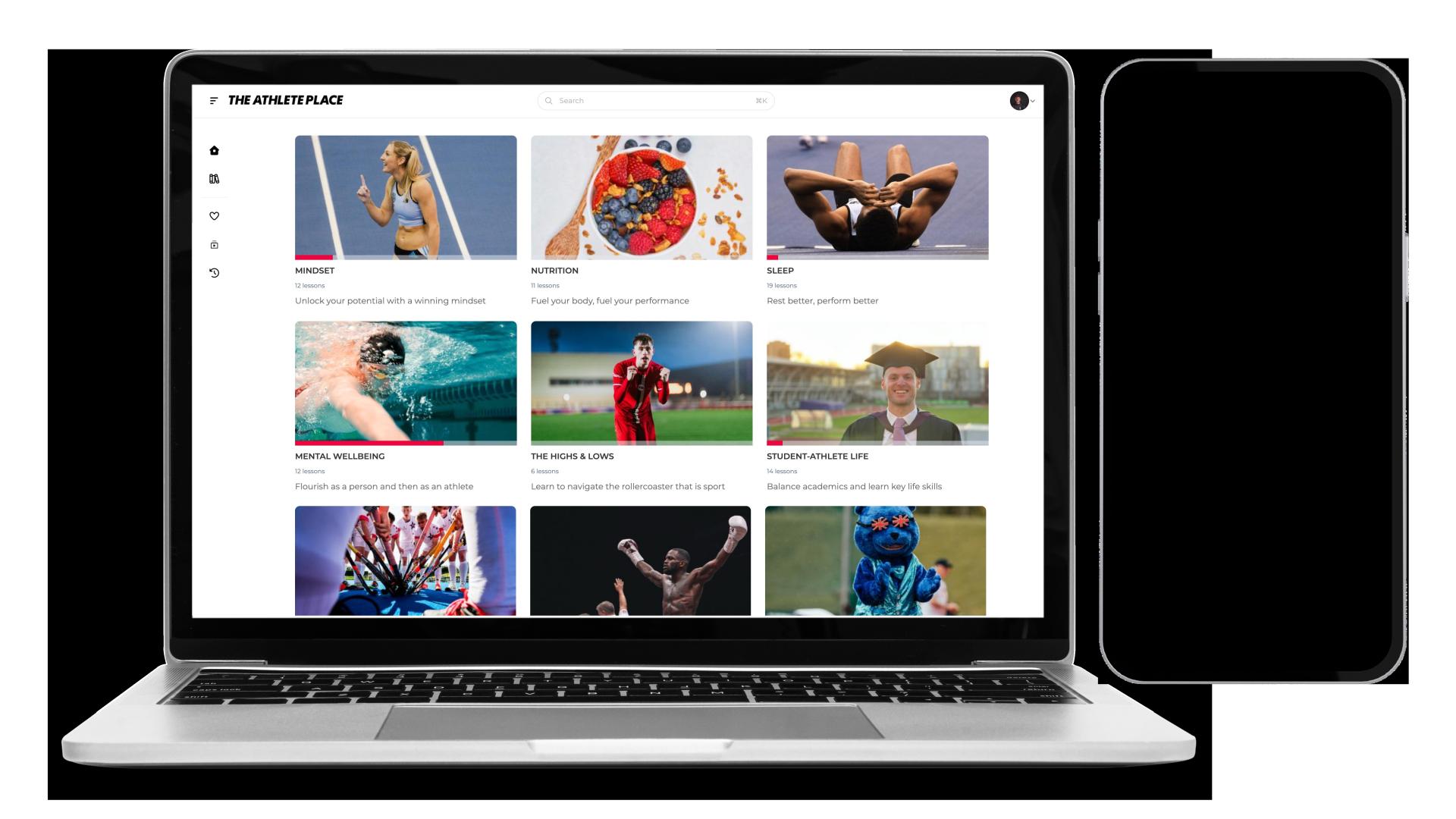
Training is only part of the story.
Our platforms are built for young athletes who want to go further, and the parents helping them get there.